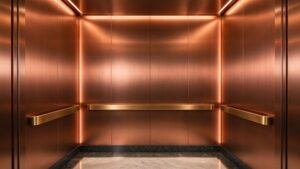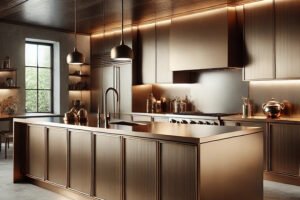
When passengers step into a luxury elevator, the first thing they notice is not the panel buttons or the floor indicator—it is the wall. The wall sets the tone of the entire ride, and for high-end hotels, premium residential towers, and boutique office buildings, antique copper stainless steel sheet has become the default cladding choice. It delivers the warmth of real bronze without the maintenance headache, the durability of stainless steel, and a patina that actually improves with age. But sourcing the right sheet for an elevator cab is nothing like ordering a standard 2B finish panel. This guide walks you through the exact specs, finishes, and sourcing realities buyers face in 2026.
What Is Antique Copper Stainless Steel Sheet?
Antique copper stainless steel is a decorative stainless steel that starts from a 304 or 316 substrate and goes through two key processes. First, the surface is chemically etched, brushed, or bead-blasted to create a textured base—usually a hairline (No.4), satin, or vibration pattern. Second, a PVD (Physical Vapor Deposition) coating is applied under vacuum, depositing a thin layer of titanium, zirconium, or chromium compounds in a warm copper-bronze tone. The result is not a painted color; the finish is integrated into the surface and typically carries a 10–15 year color warranty against fading.
The “antique” effect comes from controlled oxidation or wire-brushing after PVD, which darkens the recesses and leaves the raised areas brighter. This creates the lived-in, hand-rubbed look that real bronze develops over decades—without the annual waxing and re-lacquering real bronze requires.
Why Elevator Cab Interior, Specifically?
Elevator interiors are one of the most demanding environments for decorative metal. A cab gets touched by thousands of hands a week, cleaned with harsh chemicals daily, and is subjected to constant vibration from the traction system. Painted MDF, laminated wood veneer, and even ordinary mirror stainless steel all show wear within 18–24 months.
Antique copper stainless steel solves three problems at once:
- Scratch resistance. The PVD layer is 2,000–3,000 HV on the surface, far harder than the substrate itself. Key scratches and bag buckles that would scar a painted panel barely mark it.
- No fingerprint ghosting. Because the surface is textured (not mirror-smooth), hand prints diffuse into the grain instead of standing out. Cleaning cycles can be shortened without looking neglected.
- Warmth under cold lighting. Mirror stainless reads as sterile and commercial. The copper-bronze tone absorbs cool LED light and reflects it back as amber, which is why hospitality architects keep specifying it for lobbies that need to feel residential.
Core Specs Buyers Must Lock Before Quoting
Most disputes between contractors and suppliers trace back to one of these five specs being left vague. Get them in writing on the inquiry:
| Parameter | Standard Range | Why It Matters |
|---|---|---|
| Substrate grade | AISI 304 (indoor) / 316L (coastal or humid) | 316 adds molybdenum for chloride resistance; sea-side projects must not skimp. |
| Thickness | 0.6mm / 0.8mm / 1.0mm / 1.2mm | Cab wall cladding almost always uses 0.8mm or 1.0mm; anything thinner ripples under vibration. |
| Standard sheet size | 1219×2438mm (4×8ft) or 1219×3048mm | Larger sheets mean fewer vertical seams inside the cab. |
| Coating type | PVD (not spray painting) | Spray-painted copper stainless fades in 6–12 months under cab LED heat. |
| Edge processing | No.4 brushed edge, deburred, PVC film both sides | Unprotected edges corrode first; PVC film protects during transport and installation. |
Surface Textures to Match the Build Style
“Antique copper” is not a single finish—it is a family. The texture underneath the PVD layer changes the visual weight of the cab dramatically:
- Antique copper hairline (No.4). Vertical brushed grain. Best for classic and Art Deco cabs. The lines elongate a low ceiling.
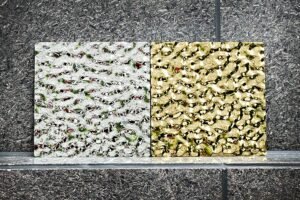
- Antique copper etched. Chemical etching creates a floral, geometric, or custom pattern under the bronze tint. Common in hospitality and casino projects.
- Antique copper vibration. Uniform dimpled texture that scatters light. Hides small dents better than hairline.
- Antique copper water ripple. Dynamic wave pattern, usually reserved for ceiling panels rather than walls—used sparingly to avoid motion sickness.
- Antique copper mirror. Polished 8K base with a light bronze tint. Rare in cabs because every smudge shows, but used in ultra-luxury residential lifts.
Real-World Project Mixes We Ship Every Month
To give you a sense of how these finishes actually combine in the field, three recent orders:
Boutique hotel in Dubai: 0.8mm 304 antique copper hairline on cab walls, paired with a black granite kick plate and brushed brass handrail. The contractor asked for a 2,500mm×1,219mm single sheet per wall to eliminate vertical seams at eye level.
Residential tower in Singapore: 1.0mm 316L antique copper etched (custom wave pattern) on all four walls, ceiling in brushed champagne gold, floor in marble. Because the site is 800m from the coast, 316L was non-negotiable.
Office lobby in Riyadh: 1.0mm 304 antique copper vibration on walls, with a 200mm-wide black mirror stainless reveal between panels. The reveal creates a modular rhythm that matches the building’s facade grid.
Sourcing Checklist: What Separates a Reliable Mill from a Trader
If you are sourcing from China (where roughly 80% of decorative stainless is produced), use this checklist on the factory:
- Ask for the PVD line, not the etching line. A factory that only does etching will outsource PVD to a coater, and the color consistency across batches will drift. Ask for photos of the vacuum coating chamber on site.
- Request a 100mm×100mm physical sample in advance. Screen renders lie. The antique copper tone shifts 15–20% between “light bronze” and “dark bronze” depending on the oxide layer. You need to hold the sample under your project’s actual lighting (3000K warm white is standard in lobbies).
- Confirm the salt spray test hours. Minimum 48 hours for indoor 304; 200+ hours for 316L coastal use. Ask for the test report, not just a verbal claim.
- Clarify the MOQ on custom etching. Standard hairline antique copper ships from 50 sheets. Custom etched patterns typically require 200–500 sheets to amortize the chemical screen cost.
- Packaging must be double-sided PVC film + wooden crate. Single-sided film means the back gets scratched during loading, and the damaged sheets are unusable for interior cladding.
Cost and Lead Time Realities (2026)
As a ballpark, 0.8mm antique copper hairline on 304 substrate currently lands at USD 48–65 per square meter FOB, depending on quantity. Custom etched patterns add 15–30% to that number. 316L substrate adds roughly 18–22%. Mirror antique copper is the most expensive option because polishing 8K before PVD is labor-intensive.
Lead times: standard finishes, 7–12 days for production plus 18–25 days sea freight to Jebel Ali, Los Angeles, or Rotterdam. Custom etched or custom PVD color matches, budget 20–25 days production. Expedited air freight is technically possible but rarely economical for full 4×8ft sheets—they ship ocean or LCL.
Frequently Asked Questions
Is antique copper stainless steel the same as real bronze cladding?
No. Real bronze is a copper-tin alloy that tarnishes, needs annual waxing, and is 3–4× more expensive. Antique copper stainless is a steel sheet with a PVD coating that mimics the bronze tone and texture. It never patinas, never needs waxing, and cleans with standard stainless polish.
Will the color fade inside an elevator cab?
Genuine PVD-coated stainless should not fade appreciably for 10–15 years, even under constant LED exposure. The failure mode you see in cheap product is spray-painted “antique copper,” which yellows or rubs off within 12–18 months. Always confirm the process is vacuum PVD, not liquid coating.
Can I bend or roll-form antique copper stainless on site?
Yes, but with a caveat. The PVD layer is hard but brittle. Radius bends tighter than 2× sheet thickness can micro-crack the coating and show silver substrate through the crack. For tight reveals and corner trims, specify factory-bent panels rather than on-site folding.
304 or 316L—when do I actually need 316L?
Use 316L if the building is within 5km of a coast, in a high-humidity climate (Southeast Asia, Gulf), or if the cab cleaning process uses bleach-based detergents. For inland, dry-climate office towers, 304 is perfectly adequate and saves ~20% on material cost.
What is the minimum order quantity?
Standard catalog finishes (hairline, satin, vibration) typically ship from 50 sheets (~150㎡). Custom etched patterns and custom color matches usually require 200 sheets minimum. Sample orders of 1–5 sheets are available but carry a per-sheet premium of roughly 40–60%.
How do I clean it once installed?
Use pH-neutral stainless cleaner and a microfiber cloth, wiping along the hairline direction. Avoid abrasive scouring pads, bleach, and acidic bathroom cleaners—these can strip the PVD layer over time. A weekly wipe-down is enough for a high-traffic hotel cab.
Get a Sample and a Quote for Your Next Cab
At Color Metals, we supply antique copper stainless steel sheet in 0.6–1.5mm thickness, 304 and 316L substrates, and the full range of hairline, etched, vibration, and mirror textures. Every order ships with a material certificate, salt spray test report, and double-sided PVC protection. We cut to your cab wall dimensions if you provide the panel layout.
Request a free physical sample pack or send your panel schedule to our sales team for a same-day FOB quote. We ship worldwide from Foshan, China, with regular consolidation to Jebel Ali, Santos, Rotterdam, and Los Angeles.