The honest answer: indoors, a genuine PVD colored sheet keeps its color for years; outdoors, it depends on three things — the stainless grade, the color itself, and whether a protective top coat was specified. This guide shows exactly where the line sits.
Quick answer: For interior use — elevator cabs, feature walls, ceilings, furniture — PVD colored stainless steel does not fade in normal service. For exterior use, choose 316L and stick to stable colors such as gold, champagne, bronze, rose gold, black and copper with a film above 0.3 µm plus an outdoor-grade anti-fingerprint (AFP) top coat. Treat blue, violet, emerald green and rainbow finishes as interior-only unless the supplier confirms an outdoor-rated protection system.
For a direct comparison with hand-worked decorative finishes, read Liquid Metal Finish vs PVD Colored Stainless Steel.
First, Why PVD Color Is Different From Paint
PVD (Physical Vapor Deposition) is a vacuum process that bonds a very thin metal-compound film — typically 0.1–0.6 µm — directly to the stainless surface. The color comes from the film’s structure and how it interferes with light, not from pigment. That distinction matters: paint fades because its pigments break down under UV; a PVD film does not bleach the same way.
This is also why genuine PVD is harder than bare steel and resists daily wear, while cheap electroplated or water-coated “colored” sheets can change tone within a season. If a quote looks far below the market, ask which process is actually being used before you compare colors.
Indoors: Does PVD Color Fade?
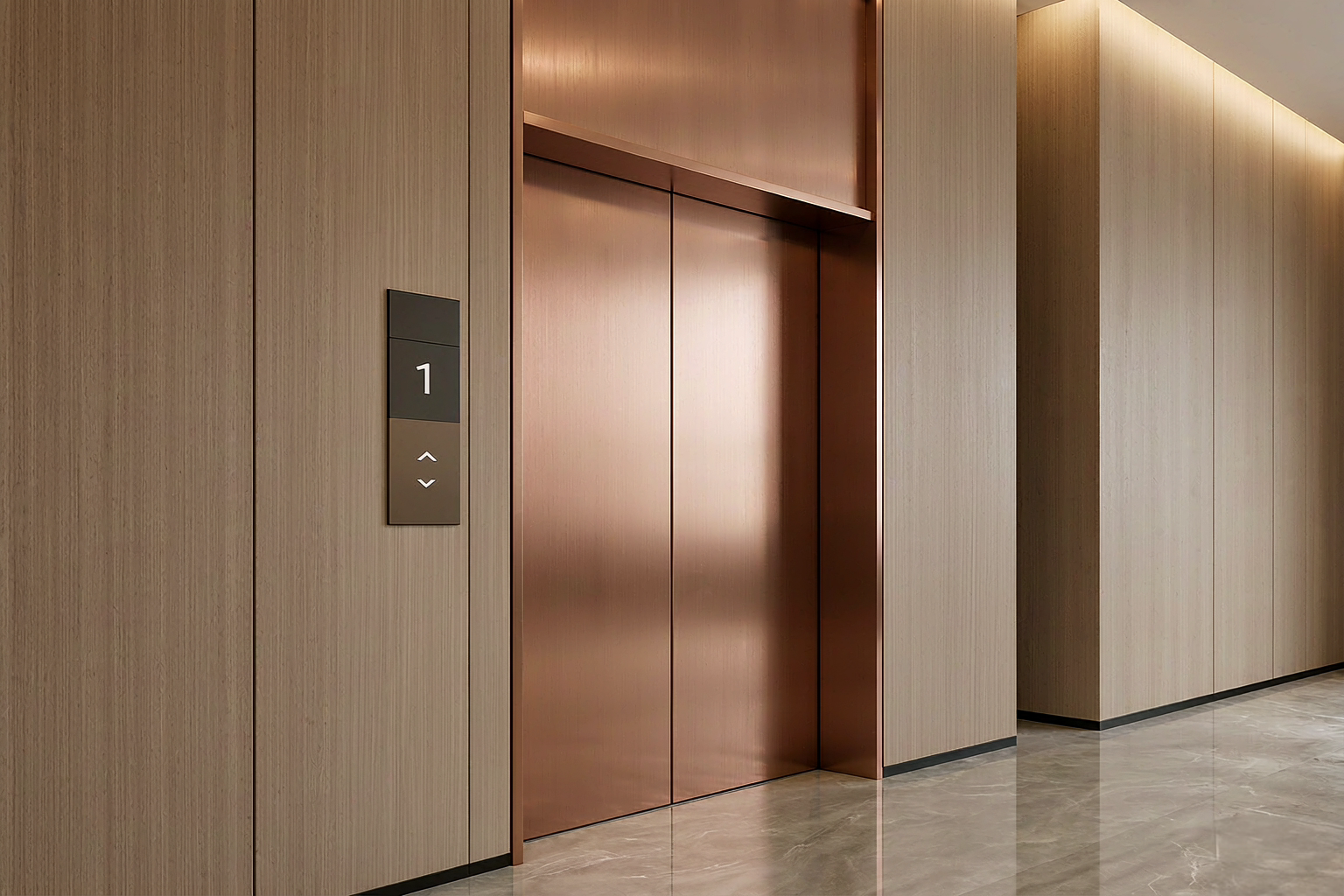
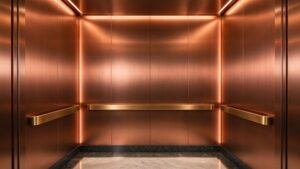
No — not in normal interior conditions. In lobbies, elevators, corridors, retail and furniture, a properly deposited PVD film holds its color for ten years or more. Indirect sunlight through glazing is not enough to break down the film.
The two things that do degrade an interior panel are abrasion and chemicals: steel wool, scouring pads, chlorine cleaners and strong acids or alkalis. High-touch surfaces — elevator buttons, door frames, reception desks — should use an anti-fingerprint top coat. On mirror bases, specify PVD AFP rather than a common oil-based AFP, which can be rubbed off and is not suited to mirror.
Outdoors: Where Color Stability Actually Depends
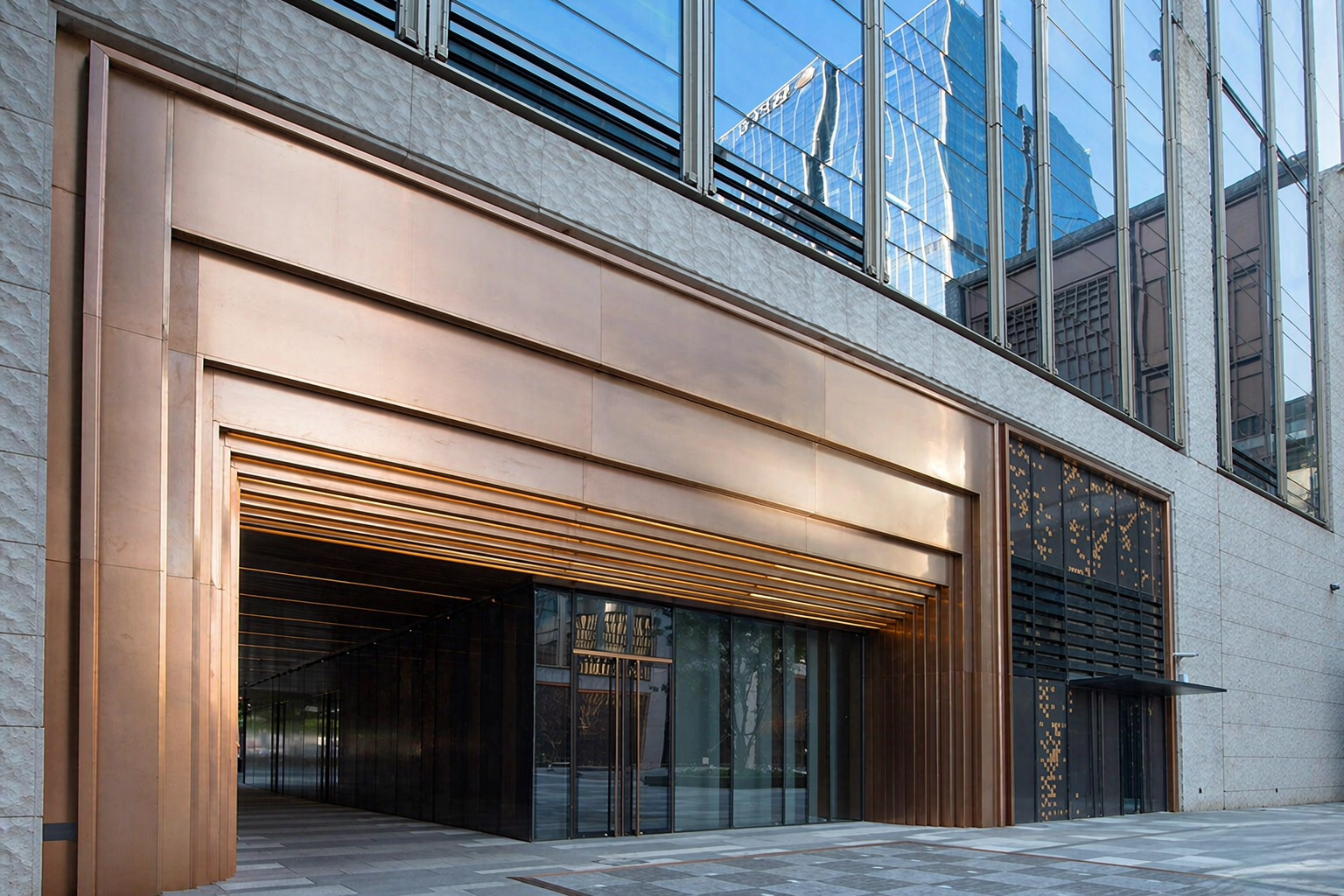
Outdoor performance is not one answer for every panel. It is a combination of three variables:
- Grade. Use 316L for coastal or humid sites; 304 is acceptable for sheltered urban facades.
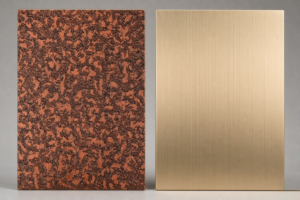
- Color. Gold, champagne, bronze, rose gold, black, grey, coffee and copper are the stable family. Blue, violet, emerald green and rainbow are angle-sensitive interference colors and need premium outdoor protection.
- Film and top coat. Ask for a film above 0.3 µm on stable colors, and an outdoor-rated AFP or PVD AFP layer on top.
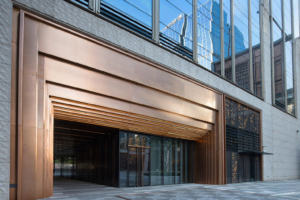
With those three in place, bronze and black PVD are specified on real exterior cladding and entrance facades. Without them — a thin film, an unstable color, 201 base steel near the coast — a panel can shift tone or weather unevenly well before the steel itself fails.
Color Stability at a Glance
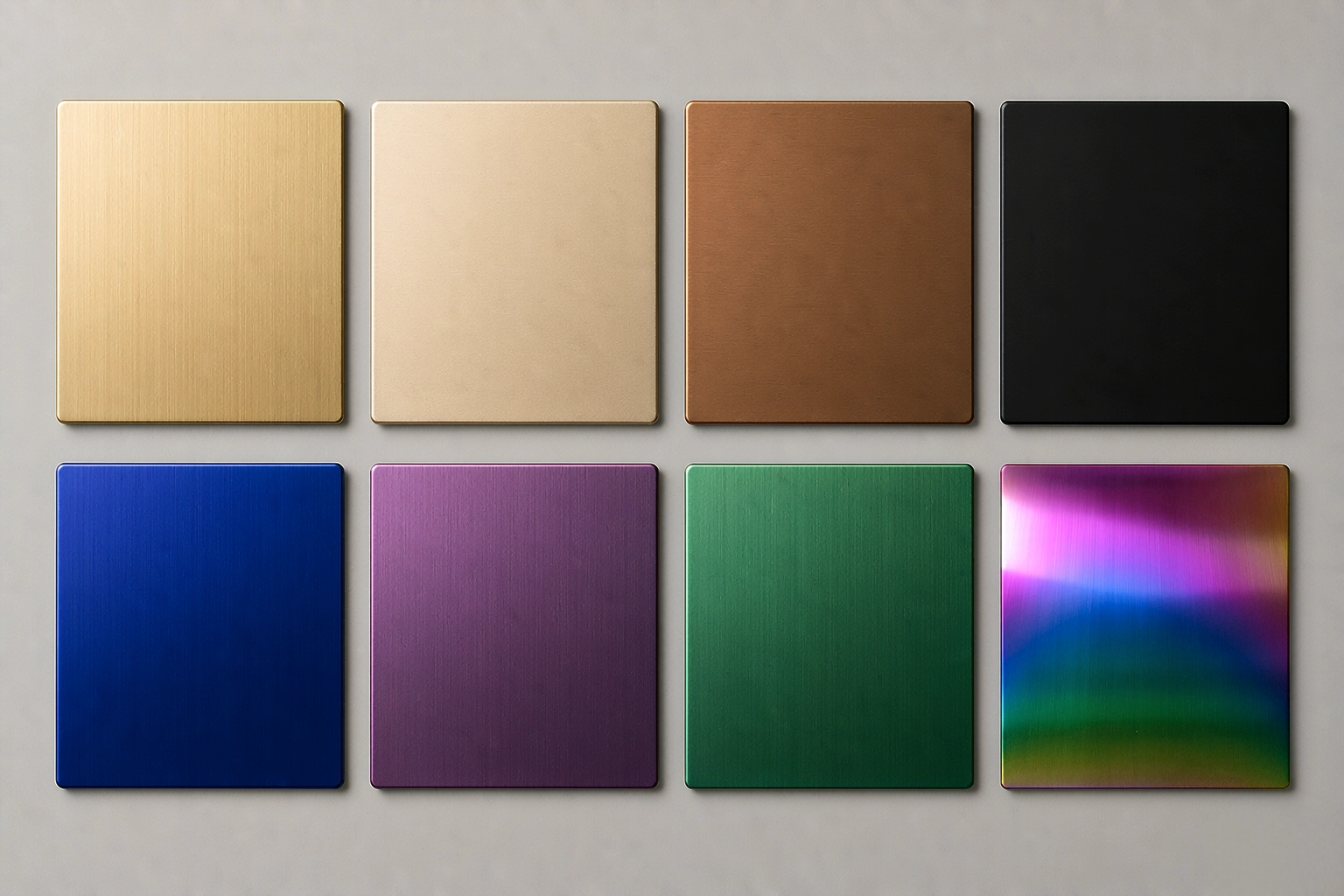
| Color family | Interior | Exterior (sheltered) | Coastal / full exposure |
|---|---|---|---|
| Gold / champagne / bronze | Stable | Stable with AFP | 316L + film > 0.3 µm + outdoor AFP |
| Rose gold / copper | Stable | Stable with AFP | 316L + outdoor AFP recommended |
| Black / grey / coffee | Stable | Stable | 316L + outdoor AFP |
| Blue / violet / green | Stable indoors | Requires premium protection | Not recommended without outdoor AFP |
| Rainbow / iridescent | Stable indoors | Specialist use only | Avoid — color shifts with viewing angle |
Values describe typical PVD behavior for specification guidance. Confirm the exact film stack and outdoor warranty with your supplier for each project.
Five Questions That Decide Indoor or Outdoor
- Is the panel sheltered? Under a canopy or recessed entrance is “semi-outdoor” — far kinder than a fully exposed wall.
- What is the distance to the sea? Coastal salt wants 316L, not 201 or 304.
- Which color family? Warm metallic tones are the safe outdoor set; iridescent tones are not.
- Will people touch it? Add AFP on high-touch panels regardless of location.
- What does the supplier warrant? Ask for the film thickness and an outdoor color warranty in writing, not just a color chart.
How to Verify a Supplier Actually Uses PVD
- Ask for the process in writing — vacuum PVD versus electroplating or water coating.
- Request the film thickness — a real range is 0.1–0.6 µm; “decorative coating” with no number is a flag.
- Approve a physical sample — color charts cannot show how a finish reads in your light.
- Confirm grade and top coat — 304 or 316L, and whether AFP or PVD AFP is included.
- Check the mill certificate — the base steel still matters even when the color is on top.
Frequently Asked Questions
More answers are collected on our FAQ page.
Does PVD colored stainless steel fade in sunlight?
Not indoors through ordinary window glass. Outdoors, stable colors such as gold and bronze hold well; the film does not bleach like paint, but the surface can weather. Grade, film thickness and top coat decide how long the color looks even.
Which PVD colors are best for outdoor use?
Gold, champagne, bronze, rose gold, copper, black, grey and coffee. For full exposure, pair them with 316L, a film above 0.3 µm and an outdoor-rated AFP top coat.
Why do blue and rainbow PVD finishes shift color?
Those colors come from light interference in a precisely tuned film. The hue changes with viewing angle and film thickness, so an iridescent panel outdoors can look different from different positions. Reserve them for interiors.
Can PVD stainless steel be used near the coast?
Yes, if the base is 316L and the finish uses a stable color with a protective top coat. Avoid 201 base steel and unstable colors in coastal or high-humidity sites.
How long does PVD color last indoors?
Ten years or more in normal interior service, provided the surface is not abraded or cleaned with harsh chemicals. High-touch areas benefit from an anti-fingerprint layer.
Is PVD color scratch-proof?
No — the film is harder than bare stainless and handles daily wear, but a sharp object can still scratch it. Mirror shows scratches most; hairline and brushed bases hide them better.
Can I bend or fabricate PVD colored sheet after coating?
Laser cutting, bending and V-grooving are fine on 304 and 316L without the color cracking. Avoid welding the colored face; weld the part before coating or join it cold.
What should I send for an accurate quotation?
Application (indoor or outdoor), color, base grade, thickness, dimensions, quantity and whether AFP is required. Include a reference sample for custom colors.
The Bottom Line
Indoors, PVD colored stainless steel is a safe, long-lasting choice in virtually any color. Outdoors, it is still a strong choice — as long as you specify the grade, the color family and the protection layer together. Get those three right and the color stays put; get them wrong and no color chart can save the panel.
TiDouble Metal, based in Foshan, China, supplies PVD colored stainless steel sheets in gold, champagne, rose gold, bronze, black, copper and custom colors, with mirror, hairline and brushed bases. Tell us where the panel will be installed and we will recommend the grade and finish that fit. Email TiDouble@163.com for samples and a quotation, or use our contact page.